Top 10 Tips For Evaluating The User Interface And Experience Of Ai Stock Predicting/Analyzing Trading Platforms
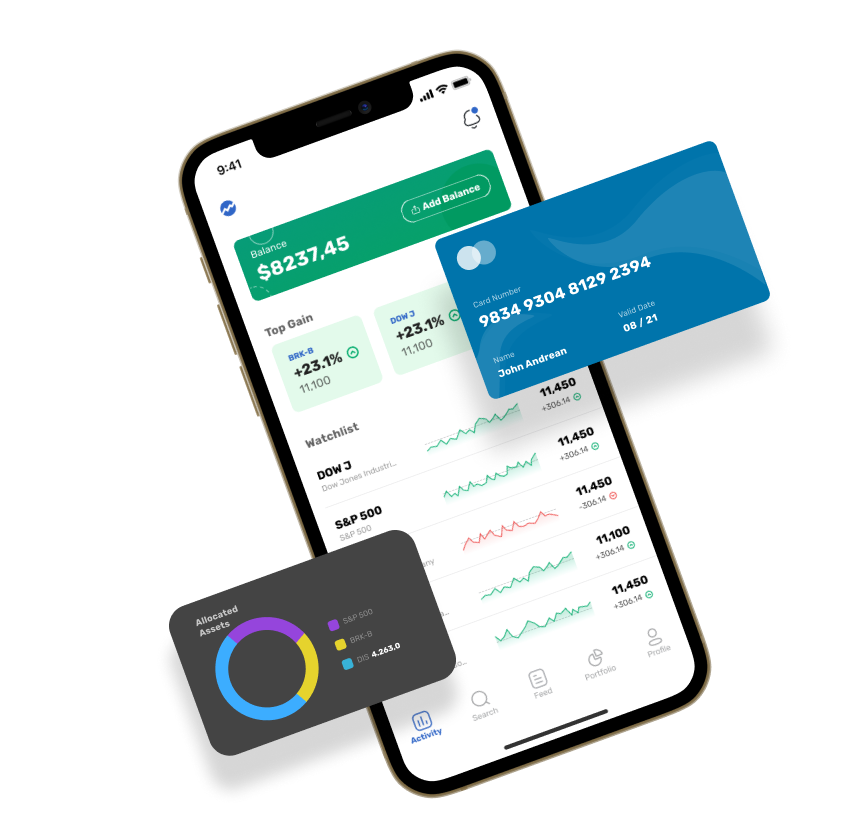
The User Interface and User Experience of AI trading platforms that use analysis and prediction of stocks are crucial in ensuring their usability and effectiveness. They also contribute to the overall satisfaction. Even even if AI models are robust but a poorly designed interface can hinder decision-making. Here are ten top suggestions to evaluate the user interface on these platforms.
1. Evaluate Intuitiveness and Ease of Use
Navigation: Ensure that the platform is simple to use, using menus and buttons that are easy to grasp, as well as workflows.
Learning curve: Find out how quickly new users can be able to use and comprehend the platform with no extensive training.
Consistency: Check for consistent design patterns (e.g., button styles or colors, etc.)) across all platforms.
2. Check Customizability
Dashboard customization: Determine if the dashboard can be personalized to show relevant metrics chart, data, or charts.
Layout flexibility: The platform must let users rearrange, resize, or even move widgets.
Themes and preferences: Check whether the platform provides dark and light options or other preferences for visuals.
3. Visualize Data
Chart quality – Ensure that the platform includes interactive charts with high resolution (e.g. candlestick charts and line charts) and includes zooming, panning, and other options.
Visual clarity – Examine to see if data are displayed clearly, using appropriate tools, labels or legends.
Real-time updates: Verify if visualizations are updated in real-time to reflect market changes.
4. Test the responsiveness and speed
Loading time: Make sure that the platform is loaded quickly, even when working with large data sets or complex calculation.
Real-time performance: Check whether the platform is able to manage real-time feeds of data without lag or delays.
Cross-device compatibility: Check if the platform works seamlessly across devices (desktop mobile, tablet).
5. The accessibility of the facility should be evaluated
Mobile app availability: Check whether the platform provides an app for mobile devices that has complete functionality to trade on the go.
Keyboard shortcuts: Ensure the platform is able to support keyboard shortcuts for the most powerful users.
Accessibility features – Make sure that the platform is compatible with accessibility standards.
6. Search and Filter Test functionality
Search efficiency: Ensure that the platform allows users to quickly look up the indices, stocks, or other assets.
Advanced filters: Find out the existence of filters that can be applied to the results.
Saved searches. Check the platform’s capability to allow users to store frequently-used search terms or filters.
7. Look for Alerts and Notifications
Customizable alerts. Users can set alarms based on certain circumstances (e.g. price thresholds or surges in the volume).
Delivery of notifications: Check whether alerts are delivered through multiple channels (e.g. SMS, email or app notifications).
Timing – Ensure whether alerts are sent out quickly and accurately.
8. Connect to other tools
Broker integration: Make sure that your platform seamlessly integrates with your brokerage account for ease of trading execution.
API access: Check whether the platform allows API access for users who are advanced to develop custom workflows or tools.
Third-party integrations : Determine if the platform allows integration with other applications, like Excel Google Sheets or trading bots.
9. Evaluate Help and Support Features
Onboarding tutorials: Check whether the platform has tutorials or walkthroughs for new users.
Help center: Make sure the platform has a complete knowledge base or help center.
Customer support: Verify if the platform offers responsive customer support (e.g. live chat, email, phone).
10. Test User Experience Overall
Reviews of user feedback: research reviews and testimonials to gauge overall user satisfaction with the platform’s UI/UX.
Trial period – Try out the platform in a free trial to see what it can do.
Verify that the error handling is correct.
Bonus Tips
Aesthetics is essential, a beautiful design can improve the user’s experience.
Performance under stress: Test your platform in high-volatility markets to make sure it’s responsive and stable.
Find out if the platform offers a user community where users can share feedback and offer suggestions.
Follow these tips to assess the user interface and UX of AI stock Predicting/Analyzing platforms. This will ensure they’re user-friendly and efficient. They must also be in line with the needs of trading. A well-designed UI/UX can help you make better decisions and help you execute your trades more effectively. View the top rated best ai for trading for site recommendations including ai investing app, ai investment platform, ai for investing, AI stock trading bot free, AI stock trading, options ai, ai for investment, AI stock market, ai for stock trading, AI stock market and more.
Top 10 Tips On Risk Management Of Ai Trading Platforms That Predict/Analyze Stock Prices
Risk management is a crucial element of any AI trading platform for predicting or analyzing stocks that helps safeguard your capital and minimize potential losses. A platform with robust risk management tools can aid you in managing volatile markets, and make educated decisions. Here are the 10 best strategies for evaluating the risk management capabilities of these platforms. capabilities:
1. Evaluation of Stop-Loss and Take-Profit Features
Flexible settings: Make sure you have the ability to set the take-profit or stop-loss level for a specific trade.
Find out if the platform allows the use of trailing stops. They automatically adjust themselves as market moves in your favor.
Guaranteed stops: Verify whether the platform provides guarantee stop-loss orders. These assure that your trade is completed at the exact price even in markets that are volatile.
2. Assess Position Sizing Tools
Fixed amount: Make sure the platform lets you define the positions you want to take based upon a sum of money that is fixed.
Percentage portfolios: Discover how risk is manageable proportionally by setting your positions as a per percent of your portfolio’s total.
Risk-reward-ratio: Check if the platform allows users to determine their own risk/reward ratios.
3. Make sure you are using Diversification Assistance
Multi-asset trading. Check that your platform supports different asset classes like ETFs, Forex, Options, and Stocks.
Sector allocation Check to see what tools are available for managing and monitoring sector exposure.
Geographic diversification – Verify that the platform allows trading on international markets. This will help diversify geographical risk.
4. Review margin and leverage controls
Margin requirements: Make sure the platform is clear about margin requirements when trading leveraged.
Check the platform to see if it allows you to limit leverage in order to reduce the risk.
Margin call: Check whether the platform provides prompt notifications regarding margin calls. This could help avoid account closure.
5. Evaluation of Risk Analytics and Reporting
Risk metrics: Make sure whether your platform contains important risk indicators like Sharpe ratio, and Drawdown for your portfolio.
Scenario assessment: See whether you can simulate various market scenarios on the platform to evaluate the potential risk.
Performance reports: Check whether you can obtain detailed reports on performance from the platform. These reports include risk-adjusted results.
6. Check for Real-Time Risk Monitoring
Portfolio monitoring – Make sure that the platform you select offers real-time monitoring to ensure your portfolio is safe.
Alerts: See if you are receiving real-time notifications for associated with risk (e.g. Stop-loss triggers or margin breaches).
Make sure you have dashboards that can be customized to give you an overview of your risk profile.
7. Test Stress Testing and backtesting
Test your strategies for stress: Ensure that that the platform you choose allows the testing of your portfolio and strategies in extreme market conditions.
Backtesting Check to see if your platform supports backtesting with historical data to evaluate the risk and performance.
Monte Carlo simulations: Verify if the platform uses Monte Carlo simulations to model the possibility of outcomes and evaluate the risk.
8. Risk Management Regulations: Assess compliance
Check for regulatory compliance: Make sure that the platform adheres to the relevant regulations for risk management (e.g. MiFID II, Reg T, in the U.S.).
Best execution : Examine to see if your platform follows the best execution practices. This ensures that trades are executed for the best possible price while minimizing the chance of slippage.
Transparency: Ensure that the platform provides transparency and clear disclosures about risks.
9. Check for user-controlled risk parameters
Custom Risk Rules: Make sure you are able to define your own rules for managing risk (e.g. the maximum amount of loss per day, a maximum size of a tradable position).
Automated Risk Controls: Check whether the system is able to automatically enforce risk management policies in accordance with predetermined parameters.
Manual overrides: Ensure that your platform allows manual overrides during emergency situations.
Review Case Studies and User Feedback
User reviews: Review reviews from customers to evaluate the effectiveness of the platform’s risk management.
Case studies: Check for testimonials or case studies that showcase the platform’s strengths in risk management.
Community forums: See if the platform has an active community of users where traders share risk management tips and strategies.
Bonus Tips:
Trial period: Make use of a no-cost demo or trial to experience the risk management capabilities of the platform in realistic scenarios.
Customer support: Make sure your platform has a robust support to any questions or issues that are related to managing risk.
Educational sources: Find out if your platform offers educational materials or tutorials that provide information on risk management techniques.
The following tips can aid you in evaluating the risk management capabilities offered by AI stock Predicting/Analyzing platforms. You can choose a platform to safeguard your investment while limiting the possibility of losses. To make trading successful and make sense of volatile markets, reliable risk management tools are essential. Have a look at the recommended AI stock analysis for site info including AI stock analysis, best AI stock prediction, ai share trading, chart ai trading, ai for trading stocks, best AI stocks, ai software stocks, ai copyright signals, AI stock prediction, ai options and more.